


For a better reading experience (especially for watching videos and reading charts), read on the Butterflies website or download the Substack app.
Modern NBA foul baiting isn’t a player problem. It’s a rule-incentive problem.
Last Spring, I wrote about how we can fix college basketball. I argued the game was too choppy with too many stoppages compared to the NBA. While the NBA is much more entertaining and watchable, foul baiting is starting to destroy the sanctity of the game.
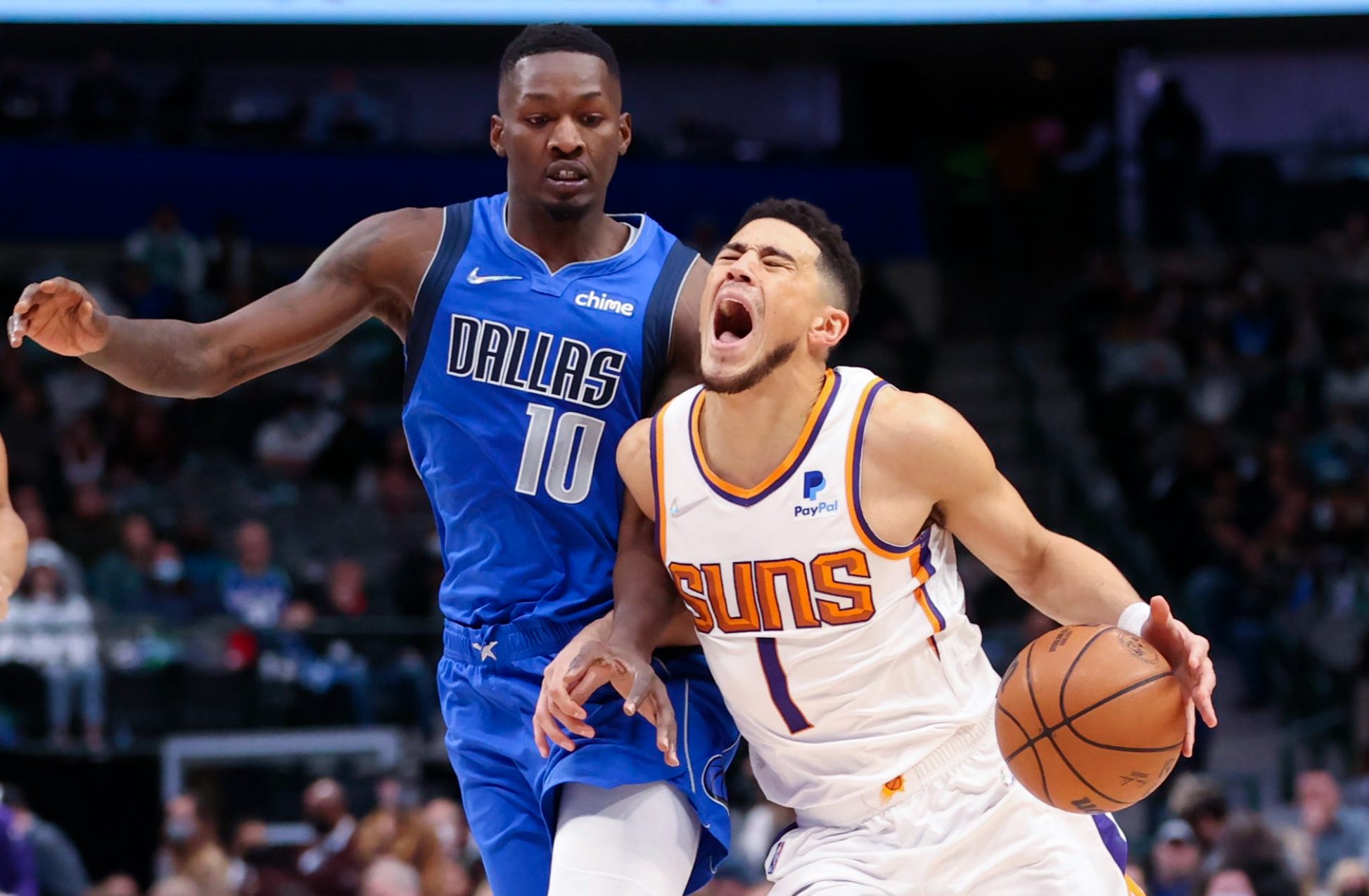
Over time, the NBA has shifted from a league where fouls punished excessive defensive contact to one where fouls increasingly reward offensive manipulation.
Fouls used to stop defenders from clobbering scorers. Now they reward offenses for creating contact defenders can’t avoid.
Foul manipulation has evolved in three phases:
Defensive deception (flopping)
Offensive exploitation of defensive mistakes
Illegal contact initiated by the offensive player
Defensive deception (flopping)
Back in the 70s and 80s, the NBA allowed much more contact. But slowly things started to change and players found ways to manipulate the game on the defensive side of the ball. Enter the art of the flop. The point of the flop is to sell the contact that is being made—to make the refs believe that the contact being made is illegal.
Players such as Valde Divac, Bill Laimbeer, and Dennis Rodman were the poster children for flopping. And it worked.
It’s difficult to say where the flop originated from; however, Divac is often cited by players as the one who took flopping to the next level.1 Once one player had success with it, it spread like wildfire.
In more recent times, offensive players have used flopping to sell foul calls. Manu Ginobili was one of the best floppers in modern times, often whipping his head back with minimal contact.2
In 2012, the NBA attempted to ban flopping with new rules and fines. The rule has gone through its iterations, but it hasn’t been very effective other than targeting a few culprits. The new rule had been so underutilized that in the first 10 years of the rule’s existence, only 31 total players had been fined.
In the 2023-24 season, the NBA implemented a non-unsportsmanlike technical foul for flopping, which has been called more frequently. Still, it hasn’t been utilized enough to eliminate flopping from the game. I get it. Calling a flopping technical foul every three minutes would get really old and bog down the flow of the game. Still, rewarding flops less often would slowly start to eliminate it from the bag of tricks players use.
Offensive exploitation of defensive mistakes
In 2004, the NBA banned defensive hand-checking, paving the way for more physical play from defenders to be punished. Officiating became more and more favorable for offenses. Defenders were now required to give offensive players space and freedom of movement was prioritized.
The rule change allowed offensive players to more easily exploit defensive mistakes. Offensive players could use moves to create situations were illegal contact was made by the defender. With this, defenders are the ones committing the foul, but the offensive player initiates moves to get defenders in a position where a foul is inevitable.
Players like Michael Jordan, Kobe Bryant, and Dwyane Wade utilized the pump fake to get defenders in the air and off balance. They would then use that to their advantage and go up into a shooting motion while defenders were on their way down or out of position, creating illegal contact and drawing fouls. Yes, the pump fake has been in the game since the 60s, but modern players have perfected it to get to the foul line.
Chris Paul is another one of the pioneers for making defenders initiate illegal contact with his masterful body control. He often used his speed to blow by defenders, cut them off, and then slow down to draw contact once the defender was on his hip. This caused illegal body contact created by the defender being out of position.
Although the herky-jerky, start-stop strategy of Chris Paul is starting to be removed from the game, I believe that exploiting defensive mistakes is still ethical because it utilizes smart offensive moves to make the defender initiate the contact first.
Illegal contact initiated by the offensive player
The early 2010s marked the real turning point. Analytics reframed offense around efficiency. Teams became smarter about seeking efficient shots and started to eliminate mid-range shots from the game. Pretty soon, layups, three pointers, and free throws became the focal point of offenses. And nothing was more efficient than free throws. Neil Paine has previously written about this and shared efficiency data on it.
Once teams realized this, the goal shifted from solely creating good shots to also creating fouls. This shift changed everything. It was only a matter of time before players figured out new ways to get to the foul line.
The difference now is that offensive players don’t just exploit defensive mistakes to draw fouls. They also initiate the illegal contact first, even when defenders are in legal guarding positions. This is what has given so many fans fits. It’s almost as if the defender can’t do anything about it. Their existence in the vicinity of the offensive player is the sin that compels the referee to blow the whistle.
Players have now added to their arsenal of offensive manipulation to initiate contact and get foul calls. Here are the ways they are doing it:
Shooting-based manipulation
Jumping into the defender while shooting: Players will unnaturally contort their body to make contact with a defender while shooting. This tactic is utilized most often after a successful pump fake, but it has been taken to the next level. However, it's clearly unnatural and not how players usually shoot a jump shot. The Association has cut back on this a bit, but it’s still rampant in the game today.3
Rip through: The rip through was perfected by Chris Paul when in a triple threat position.4 When a defender is guarding and has their hands out in front, the offensive player rips their arms from one side of their body to the other, making contact with the defender on the way through. Offensive players then pull up into a shot and easily get to the free-throw line. This tactic became too common and a cheat to get an easy shooting foul, so the NBA changed the rules for this to be a non-shooting foul.
Unnatural shooting motion: Shai Gilgeous-Alexander has iterated on the rip-through move Chris Paul perfected. The unnatural shooting motion can start from any body position instead of in a triple threat position. SGA is great at using his off-hand to raise up and create contact as if he is going into a shooting motion.5 The move is completely unnatural to how anyone raises up to shoot, but that's obviously the point. He isn't actually trying to score in these situations. He's just trying to create contact to get a shooting foul call.
Spatial manipulation
Leg kick on jump shots: Shooters will extend their legs in unnatural ways to try to draw contact with the defender and get the foul call.6 Reggie Miller had some of this offensive initiated contact in his game when he would kick out his leg on jump shots, but the physical play in the game at the time kept the foul baiting in check. The Association is doing a better job of catching this trick and calling offensive fouls, but pretty much everyone does it and it happens regularly.
Extending landing space: According to the rules, defenders need to allow space for shooters to land. Thank Zaza Pachulia for that. However, some jump shooters will jump forward and land unnaturally, seeking contact with the defender in hopes of drawing a foul.7
Driving-based manipulation
Driving into arm contact: When an offensive player comes hard off a pick and roll, it creates mismatches with the smaller ball handler attacking a big. The point is to crossover and attack the front foot of the defender as they are in their defensive stance. After crossing over and attacking the front foot, offensive players will pick up the ball low and sweep their arms up to make contact with the defender's arm.8 Defenders will oftentimes reach in, but sometimes the offensive player just sweeps their arms up to make contact when the defender is in a legal guarding position. James Harden perfected this move, and now many are doing it, including rising players such as Deni Avdija.
Arm hook: Ah, the old arm hook. James Harden perfected hooking the arm of defenders, usually on drives. He would then raise up, causing contact that made it appear the defender was reaching in.9 Referees have figured it out and clamped down on this offensive player initiated contact, but it still happens regularly.
Hip/shoulder bump: Shai Gilgeous-Alexander may not have invented the subtle hip/shoulder bump, but he certainly has perfected it. He initiates contact while driving and then exaggerates the contact to get the call.10 Defenders are left helpless without any room to avoid the contact.
Let’s fix the game
Flopping and offensive players initiating contact…
Some of these techniques have been dealt with after the 2021 rule change on non-basketball moves. But players adapt and will always find new techniques to draw fouls. As long as the incentives of foul baiting remain, new unnatural contact will be drawn by offensive players.
If the NBA truly wants to eliminate foul baiting from the game, it will have to adopt rules similar to FIBA. The NBA prioritizes offensive freedom. FIBA prioritizes the flow of the game. The NBA rewards trickery and offensive aggression. FIBA punishes players who make initial contact.
The NBA didn’t just overcorrect when it eliminated hand-checking; it rewarded deception. In trying to free offenses, it created a system where initiating contact is just as valuable as creating open shots. Until the league realigns incentives toward ethical basketball, players will continue to exploit every gray area available to them.
The NBA needs to get back to a game where defenses have a chance. Physicality should be a part of the game. It makes for a better flowing and more entertaining game. Fans didn’t fall in love with basketball because of whistles. The post–2024 All-Star break officiating showed that when the game is allowed to breathe, it’s still as beautiful as ever.
Great article, this is something that has truly gotten out of control in the NBA. Some of it has been around for a long time; I remember doing a type of "rip through" in HS some 45 years ago and we had a "professional flopper" on our team but this other stuff is just pure manipulation of the rules.