


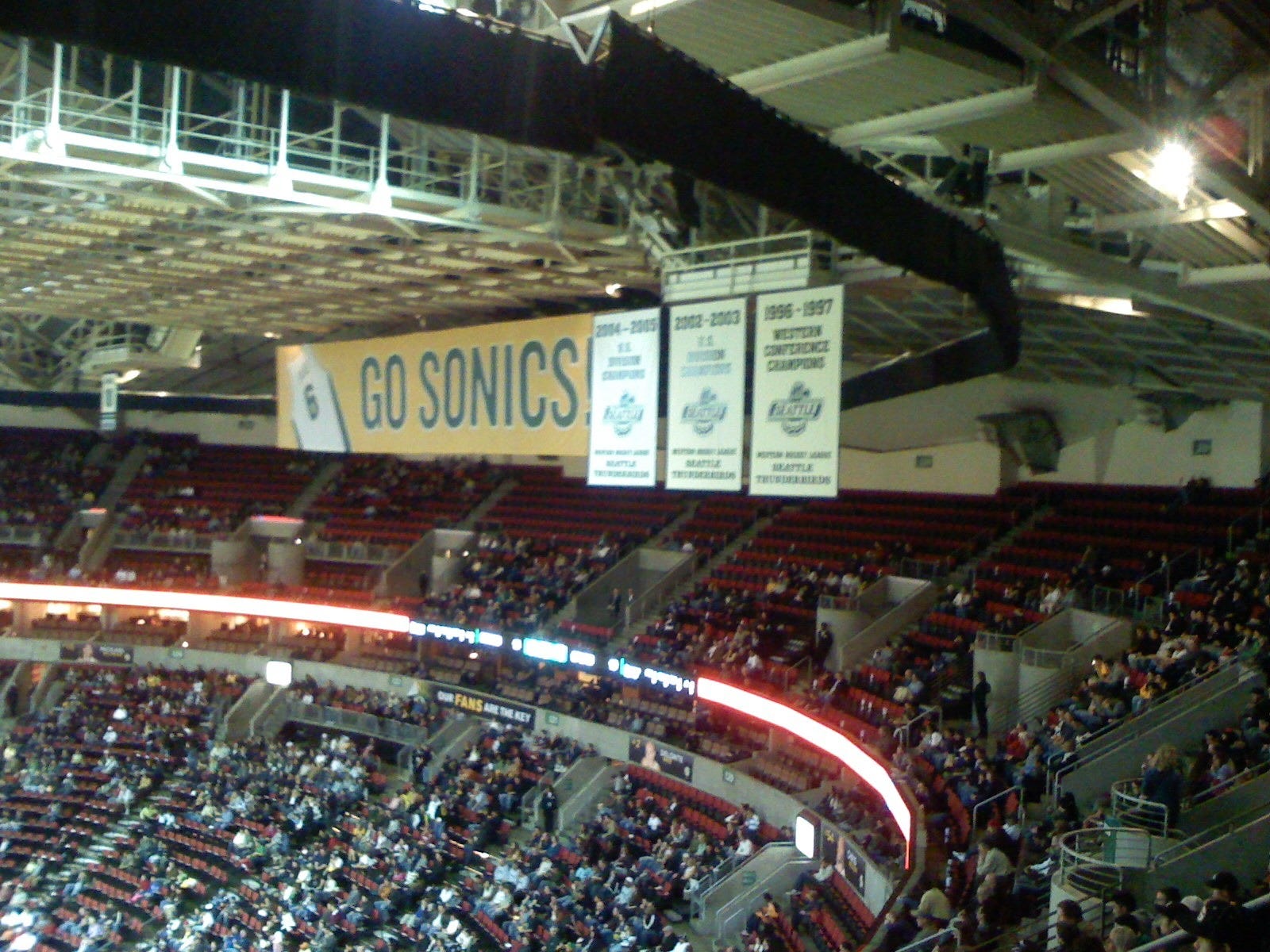
Having grown up in Portland and being a Trail Blazers fan, I have not enjoyed watching this saga with the new ownership team. It’s a little heartbreaking that the Blazers moving out of state is actually a possibility. I’ve seen other sports franchises move during my lifetime, but now I am getting a taste of what it actually feels like. It almost feels wrong.
A sports team is the fabric of a city, especially the Blazers, since they’re the one big-league team in Portland. I feel for all the fans. I feel for Dame Lillard, who I’m sure came back because of the city and his family more than anything else. I feel for myself.
I’m also not naive to the business side of this. Oregon is a high-tax state and is difficult to do business in compared to plenty of other places. From a fiscal perspective, it probably does make sense to move. But when a sports team is removed from its home, it rips away the personality and heart of a city.
A lot has been said about Tom Dundon in the media, most of it negative. It started with some of his shenanigans during the Blazers’ first-round playoff series against the Spurs. From the fan T-shirt debacle, to not taking the two-way players on the first road trip of the playoffs, to not having late checkout for some of the staff, it was clear he manages by a different rulebook.
That rulebook is still in full use this offseason, with multiple firings and layoffs happening across the Blazers organization. All of this cost-cutting has led Bill Simmons to start calling Dundon “El Cheapo,” a nickname that has caught on among NBA fans.
Jason Quick of The Athletic has been doing a great job reporting the current negotiations between the city of Portland and the Trail Blazers. I’m not going to rehash everything that’s already been reported. If you want the details, go read his articles or search Twitter for the important anecdotes. Still, there are a few important things to note…
Quick reported that Dewayne Hankins, the Blazers’ President of Business Operations, said:
“The arena is only a small piece of [the] bigger picture. Portland’s current stagnant business climate, high income taxes, and divisive political environment make this a tough city to invest in. It makes it harder to sell tickets, secure corporate partnerships, and recruit players.”
Some of the points he made are debatable, but that doesn’t change how the new ownership group perceives the situation.
The state, city, and county have now approved $586 million for arena renovations, so it comes down to negotiating a new arena contract between now and December 17th, when the Portland city council will hold its next vote. That vote could lock the Blazers into Portland until 2050, assuming the city and the team can reach an agreement.
However, if they don’t reach an agreement by December 31st, over half the cash committed by the Oregon state legislature will expire, putting the whole “Portland” in Portland Trail Blazers in real jeopardy.
I’ve seen tweets over the last couple of weeks saying this feels exactly like 2008 with the Sonics. I took the time to research the timeline1 for how Seattle lost its basketball team. After reviewing the details, it isn’t exactly the same, but the motivation of the two ownership groups does feel similar.
Let’s take a painful look (for Sonics fans) down memory lane.
January 2001
Howard Schultz, the Starbucks founder, and a group of investors bought the Seattle SuperSonics for $200 million. While owning the team, he famously feuded with Gary Payton, Desmond Mason, and Rashard Lewis.
2005–2006
Hurricane Katrina forced the New Orleans Hornets to relocate temporarily to Oklahoma City for two seasons. The experiment created strong local enthusiasm to bring the NBA to Oklahoma City permanently. The city already had the Ford Center, an arena suited for hosting an NBA team.
Feb 2006
Schultz had been demanding public funding to renovate KeyArena. Schultz pushed for a funding package of over $200 million to upgrade the venue. David Stern even urged the city of Seattle to move forward with the project, calling KeyArena the “least competitive lease in the league.”
Shultz said that he would have to either move or sell the team if he didn’t get the funding.
Having already recently invested in upgrades, the city wasn’t excited about sinking new money into the arena. From the City of Seattle’s government website, it says:
“In 1993, the City and the Seattle Supersonics negotiated a revenue-sharing lease agreement designed to fund the reconstruction of the 30-year-old [arena] from building revenues, without dedicated public tax sources. The impetus for the 1993 renovations was to modernize the arena and…retain the NBA Sonics franchise as the anchor sports tenant. The total project cost was $104 million, with the Sonics contributing $21 million for the buildout…
In 1994, the City Council approved a 15-year agreement with the Sonics and authorized $73.4 million in 20-year bonds for [KeyArena] construction. In return for the City’s investment, Seattle received some revenue from club seat sales, admissions, and the naming sponsorship. A renovation fund contained within the lease agreement accumulated $4.3 million between 1995 and 2003 to ensure that the venue remained state-of-the-art.”
July 2006
With no funding for an arena renovation in sight, Schultz agreed to sell the Seattle SuperSonics to Clay Bennett, the leader of an Oklahoma City-based group, for $350 million. Schultz said he and his 58 investors lost over $60 million since purchasing the team five and a half years earlier.
October 2006
The NBA approves the sale of the Sonics. As part of the contractual obligations, Bennett must spend a year of “good faith best efforts“ to find a viable home for the Sonics in Seattle.
January 2007
Just three months after buying the Sonics, Bennett is already making plans around the possibility of a move to Oklahoma City.
Behind the scenes, Bennett’s ownership group was already in contact with Oklahoma City officials. An email from a consultant to Oklahoma City mayor Mick Cornett discussed briefing the mayor on questions about the Sonics moving to Oklahoma City and coordinating his public talking points.
Feb 2007
Bennett says he wants to build a $530 million basketball arena in Renton, Washington, just south of Seattle. He asked for $300 million in taxpayer money for the construction, but the city isn’t willing to entertain the idea.
Spring–Summer 2007
While Bennett was publicly pursuing an arena solution in the Seattle area, his ownership group continued to lay the groundwork with Oklahoma City.
Emails from a Bennett consultant discussed negotiations over potential relocation costs, including the arena and a practice facility.
August 2007
With no solution to the Sonics arena in sight, Aubrey McClendon, co-owner of the Sonics, told an Oklahoma newspaper, “We didn’t buy the team to keep it in Seattle. We hoped to come here.” The NBA fined McClendon $250,000 for the comments.
September 2007
Seeing potential for issues down the line, the Seattle City Council unanimously passes a new ordinance saying the Sonics are bound to its KeyArena lease through 2010. Two weeks later, Bennett filed papers to begin the process of getting out of the final two years of his lease with KeyArena. The Seattle city attorney immediately filed a lawsuit to block any attempt by the Sonics to get out of its lease.
Meanwhile, a local Native American tribe in Auburn, just south of Seattle, says it is willing to donate over 26 acres of land to any group that wants to build an NBA arena there.
November 2007
One year and one month after the NBA approved the sale of the Sonics, and having completed the 12 months of a “good faith best efforts“ to make it work in Seattle, Bennett informs Stern that he intends to move the Sonics to Oklahoma City. His only obstacle was now to get out of his lease with KeyArena.
A week later, Stern tells reporters in Oklahoma City that, “If the Sonics do move, that would be too bad because the NBA would be very unlikely to have a team in Seattle again.”
February 2008
Bennett offers the city of Seattle over $26 million for the right to get out of the final two years of its lease. The city rejects the offer.
March 2008
Oklahoma City started preparing for the Sonics’ arrival. Voters approved a one-cent sales-tax extension that would generate approximately $121 million to renovate the Ford Center.
Bennett’s ownership group reached a preliminary agreement with Oklahoma City for a 15-year lease of the Ford Center and the development of a new practice facility. The agreement was contingent on NBA approval of the relocation and Bennett getting out of his Seattle lease.
At the same time, Microsoft CEO Steve Ballmer offered to contribute $150 million toward a renovation of KeyArena in an effort to keep the Sonics in Seattle. The proposal had an April 10 deadline.
Early April 2008
Mayor Greg Nickels acknowledged that Seattle couldn’t meet the deadline to secure the remaining money needed for the proposed KeyArena renovation. This was a major blow to the city’s effort to keep the Sonics. Seattle had one option remaining: Take legal action against the Sonics to keep Bennett in his KeyArena lease.
Around this time, emails from 2007 became public, showing that Bennett and his ownership group had discussed moving the team to Oklahoma City much earlier than they had acknowledged publicly.
One email reply from Bennett, after being asked if there would be a way to move the team before the next season, said, “I am a man possessed! We do everything we can. Thanks for hanging with me boys, the game is getting started!”
The emails made the ownership group’s claims that they were making a “good faith best effort” to keep the team in Seattle a lot more complicated.
April 13th, 2008
The Sonics played their final game in Seattle. Fans chanted, “Save our Sonics!” in a 99-95 win against a 50-win Dallas team. The Sonics finished the season with 19 wins in Kevin Durant’s first year with the team.
Mid April 2008
Stern said he felt Bennett made a good-faith effort to keep the team in Seattle. The NBA owners moved forward with a vote to approve the Sonics’ relocation to Oklahoma City. Only Dallas (Mark Cuban) and Portland (Paul Allen) voted against the move. Bennett was officially approved to move the team. He just needed to figure out how to get out of the KeyArena lease.
Late April 2008
Howard Schultz filed a lawsuit seeking to reverse his 2006 sale of the Sonics to Bennett’s ownership group. Schultz argued that Bennett had misrepresented his intentions and had not actually intended to make a good-faith effort to keep the team in Seattle.
Seattle produced additional evidence suggesting that NBA officials themselves had concerns dating back to 2007 about whether Bennett’s group was genuinely trying to keep the team in Seattle. It gave both the city and Schultz more evidence that moving the team may have been the plan all along.
Early June 2008
Bennett’s attorneys asked the court to dismiss Howard Schultz’s lawsuit seeking to undo his sale of the team. They argued that it was impossible to reverse a sale that had already been completed. Schultz later dropped the suit after the NBA said he’d signed a binding no-sue agreement as part of the sale.
Mid June 2008
A six-day trial began over the team’s KeyArena lease. About 3,000 Sonics fans gathered outside the courthouse in Seattle for a “Save Our Sonics” rally. Former Sonics players Gary Payton and Xavier McDaniel attended.
Bennett took the witness stand under oath. He was questioned about his 2007 email saying he was “a man possessed.” Bennett insisted that he had meant he was determined to find a solution that would keep the Sonics in Seattle.
Bennett testified that forcing the Sonics to remain in Seattle for the final two years of their KeyArena lease would cost the team approximately $60 million. His attorneys also presented an economics professor who argued that professional sports teams have essentially no economic impact on a region. According to Seattle’s economic analysis, the Sonics’ annual impact for the region was about $187 million.
July 2nd, 2008
Hours before the trial verdict was supposed to be announced, Bennett and Nickels called a news conference announcing a $45-million settlement to be paid to the city of Seattle. An additional $30 million would be paid if Seattle received no replacement NBA team within five years of the Sonics’ departure.
The new Oklahoma City team wasn’t permitted to use the SuperSonics name, logo, or the green and gold colors in case Seattle ever got a team again. The franchise history and 1979 championship are part of the Thunder’s franchise history, but the physical championship banner, trophy, and retired jerseys remained in Seattle.
Bennett said the new Oklahoma City team would create duplicate championship banners and trophies for undetermined purposes in Oklahoma City; however, no replica 1979 championship banner has been hung in Oklahoma City.
Once in Oklahoma City, Bennett said in a news conference, “We made it.”
Aftermath
Seattle’s $30 million payout eventually came due since no replacement team arrived within five years.
In 2019, Schultz called selling the team “one of the biggest regrets of my professional life.” He continued by saying he should have been willing to lose money until a local buyer emerged.
Woulda, coulda, shoulda.
The majority of the timeline came from the Los Angeles Times and the Seattle Post-Intelligencer. If not hyperlinked in the article, it came from these two sources.